

Sustainability is more visible than ever, and harder than ever to distinguish.
Most brands now meet baseline expectations. They report, track, certify, and communicate progress. But for audiences outside sustainability teams, the result is often the same: similar language, similar claims, and little sense of what impact actually looks like in the real world.
That doesn’t mean the work isn’t real. It means the way it’s explained often isn’t working.
As sustainability has become more technical, it has also become harder to understand. And when impact is difficult to understand, trust weakens even when intentions are genuine.
In today’s landscape, clarity is the differentiator.
When sustainability becomes hard to understand, trust erodes
Much of today’s sustainable brand communication is built for audits, not for people.
Frameworks, targets, and certifications are essential for accountability, but they rarely help audiences answer a basic question: what does this action lead to? For most people, the detail obscures the outcome rather than clarifying it.
When that link isn’t visible, skepticism fills the gap even when intentions are genuine.
Compliance is the baseline, not the story
Regulation defines what brands must do. It sets minimum standards and guardrails.
But compliance alone only shows that responsibility is being managed internally. It doesn’t explain how that responsibility shows up beyond reports, dashboards, or annual disclosures.
This is where many sustainability narratives stall. The action exists, but the story never moves past obligation.
Why impact expectations have changed
Audiences now expect more than plans and long-term commitments.
They want to see action that exists today, not just targets for tomorrow, and they want to understand how that action connects to real-world outcomes. Visibility has become a proxy for credibility.
This shift is why models that make impact easier to grasp are becoming a strategic advantage, not just a sustainability choice.
Why Buy One → Remove One cuts through
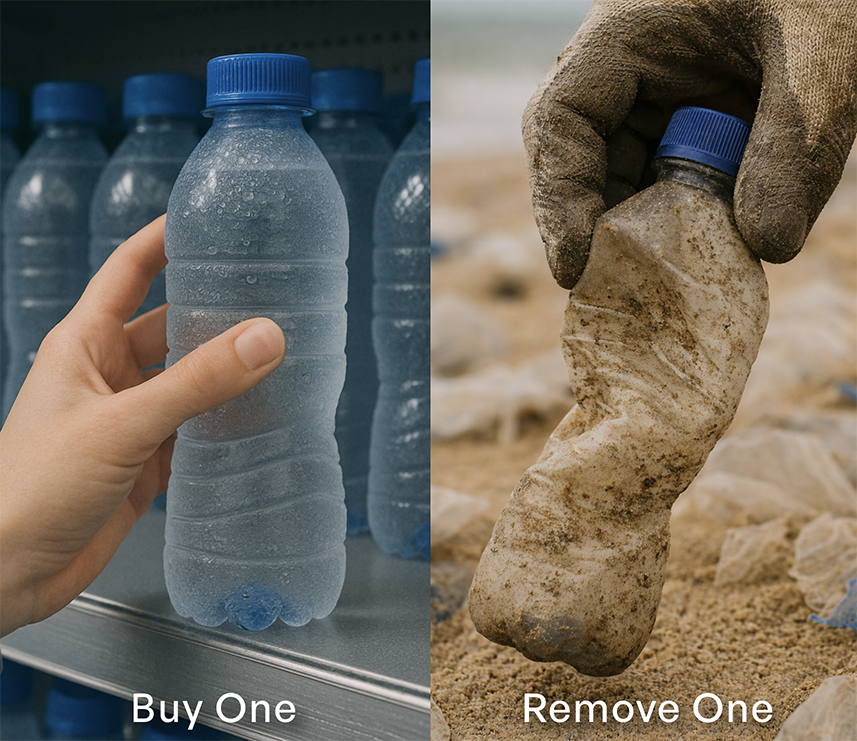
Buy One → Remove One works because the relationship between action and outcome is clear.
A product is sold. Plastic is removed from the environment.
There’s no abstraction to interpret and no technical narrative to decode. Importantly, this model doesn’t replace compliance or internal sustainability work. It sits alongside them, answering a different question: how responsibility shows up beyond reporting, in everyday decisions.
Buy One → Remove One functions not only as an impact mechanism, but as a communication model for sustainability in a crowded landscape, By linking purchases to verified plastic recovery, Buy One → Remove One makes impact tangible for people who don’t live inside sustainability frameworks.

Standing out in a sea of sustainability sameness
When most sustainability messaging sounds similar, differentiation doesn’t come from adding more detail or more claims.
It comes from being understood.
Buy One → Remove One works as a communication model because it removes friction. It doesn’t ask people to decode sustainability language or trust abstract metrics. It shows them what happens.
That clarity is what cuts through.
From obligation to action
Regulation and reporting will continue to shape sustainability strategy. But brands will increasingly be judged on whether their impact can be understood outside their organisations.
Buy One → Remove One reflects that shift not toward doing less, but toward making action visible.
In a crowded sustainability landscape, the stories that endure are not the most detailed, but the ones people can clearly see.
Ready to make your impact easier to understand?
Buy One → Remove One helps brands turn sustainability commitments into clear, credible action that customers can see and trust.
FAQs
Why are sustainability claims losing trust with consumers?
Many sustainability claims rely on complex metrics, technical language, and long-term targets that are difficult for audiences to interpret or connect to real-world outcomes.
How can brands communicate sustainability impact more clearly?
Brands can focus on simple cause-and-effect models that make outcomes visible, tangible, and easy to explain, rather than relying only on abstract reporting.
Is Buy One → Remove One a compliance solution?
No. Buy One → Remove One complements compliance by showing how responsibility extends beyond regulatory requirements into real-world plastic recovery.
How does plastic recovery go beyond compliance?
Plastic recovery addresses environmental leakage directly, supporting action outside internal operations while building trust through visible, verified impact.