


For many organisations, conversations about sustainability now revolve around Scope 1, Scope 2, and Scope 3. These terms appear in ESG reports, investor briefings, and regulatory discussions, often without explanation.
If you are not a sustainability specialist, that can feel disorienting.
Before discussing how certified plastic credits support Scope 3 strategies, it is important to step back and explain what these scopes actually mean, why they exist, and why plastic is primarily a Scope 3 issue for most brands.
What are Scope 1, Scope 2, and Scope 3, and why were they introduced?
The concepts of Scope 1, Scope 2, and Scope 3 were introduced by the Greenhouse Gas Protocol, a global accounting framework developed by the World Resources Institute (WRI) and the World Business Council for Sustainable Development (WBCSD) in the early 2000s.
They were created to solve a basic problem: companies were reporting environmental impact based only on what happened inside their own operations, while the majority of real-world impact sat elsewhere.
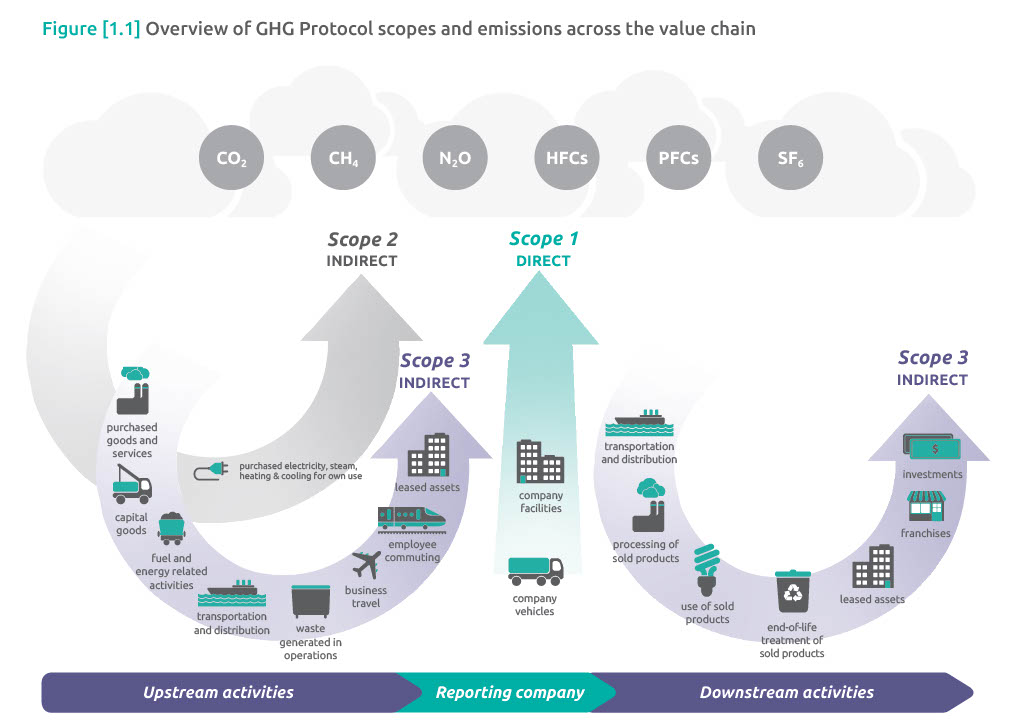
The scopes separate corporate impact into three categories.
Scope 1: direct operations
Scope 1 covers impacts a company directly owns or controls. This includes things like fuel used on site, company-owned vehicles, and emissions from manufacturing facilities.
These are the impacts businesses have the most immediate control over.
Scope 2: purchased energy
Scope 2 includes indirect impacts from purchased electricity, heat, or steam. The emissions occur off-site, but they are driven by a company’s energy consumption decisions.
Scope 2: the value chain
Scope 3 captures everything else across the value chain, both upstream and downstream.
For plastic, this typically includes:
- Raw material extraction and resin production
- Packaging manufacturing
- Distribution and retail
- Consumer use
- End-of-life waste management
Scope 3 exists because, without it, most companies would be reporting only a fraction of their true impact.
Why plastic impact largely sits in Scope 3
For consumer-facing brands, Scope 3 often represents 80-90% of total environmental impact. Plastic is a clear example of why.
Once packaging leaves a company’s factory:
- It moves across multiple suppliers and geographies
- It enters waste systems brands do not own
- Its end-of-life outcome becomes highly uncertain
In many markets, waste infrastructure is fragmented or underfunded. Leakage risk is highest precisely where consumption is growing fastest.
As a result, plastic pollution is rarely caused by a lack of intent from brands. It is caused by structural gaps in global waste systems, gaps that sit squarely in Scope 3.
This is why regulators, investors, and standards bodies are now placing far greater emphasis on Scope 3 disclosure and accountability, particularly for packaging and materials.
Where certified plastic credits fit
Certified plastic credits emerge at this point in the conversation, not as a replacement for reduction, but as a response to residual impact.
Even brands with strong packaging reduction, reuse, and redesign programs are left with plastic they cannot yet eliminate. That does not make the impact disappear.
Certified plastic credits allow brands to:
- Take responsibility for plastic beyond their direct control
- Support recovery where leakage risk is highest
- Act while longer-term reduction strategies continue to scale
They are best understood as a supporting mechanism, not a solution in isolation.
What are certified plastic credits?
Certified plastic credits represent a verified quantity of plastic waste that has been collected and responsibly processed beyond existing waste management systems.
Each credit corresponds to physical plastic recovery, usually measured in tonnes. Credits are issued only after recovery activities are:
- Independently audited
- Traceable across the value chain
- Verified against a recognised methodology
High-integrity programs focus on additionality, meaning the recovery would not have occurred without credit financing. Many also include social safeguards, recognising the role of waste pickers and local recovery networks in global waste systems.
Certified plastic credits are not the same as informal “plastic neutrality” claims. Credible plastic recovery programs are deliberately conservative, prioritising verification and impact over marketing language.
Why this matters for Scope 3 strategies
Plastic presents a uniquely complex Scope 3 challenge:
- Waste infrastructure varies dramatically by geography
- Brands lack direct control over end-of-life outcomes
- The risk of leakage is uneven and often invisible
Certified plastic credits matter because they allow brands to:
- Address residual plastic impact that cannot yet be eliminated
- Direct finance to underfunded, high-leakage regions
- Demonstrate responsibility without overstating progress
Guidance from organisations such as UNEP and the OECD is clear: credits do not replace reduction or redesign. Used correctly, they support responsibility not absolution.
How brands use certified plastic credits in practice
Leading organisations follow a structured approach.
Measure the plastic footprint
Brands start by quantifying plastic use across packaging formats, materials, and markets to understand where Scope 3 exposure sits.
Reduce what they can control
Priority actions typically include:
- Lightweighting and material reduction
- Reuse and refill models
- Design for recyclability
- Supplier engagement and procurement standards
These actions remain the foundation of any credible strategy.
Address residual impact responsibly
Certified plastic credits are then used to support plastic recovery of equivalent volumes of plastic, often focused on material types or regions where leakage risk is highest.
This allows brands to take responsibility for plastic that cannot yet be eliminated, without overstating impact.
Communicate with precision
Responsible brands ensure claims are:
- Clear about what credits do, which is to support recovery
- Transparent about volumes and methodologies
- Explicit about limitations
This precision protects brand trust and aligns with emerging green claims regulation.
Key risks and how credible brands avoid them
Plastic credits are under increasing scrutiny. Misuse carries reputational, legal, and regulatory risk.
Credible brands avoid:
- Claiming “plastic neutral” without verified reductions
- Using non-certified or unverifiable recovery data
- Treating credits as Scope 3 emissions reductions
- Overlooking worker safety and waste-picker livelihoods
Instead, they partner with programs that are independently audited, methodologically transparent, and designed to complement reduction.
As frameworks such as the EU Green Claims Directive and PPWR mature, conservative, evidence-based approaches are becoming the baseline expectation.
A tool for responsibility
Certified plastic credits can play a legitimate role in Scope 3 strategies but only when used responsibly.
For CEOs, marketing leaders, and sustainability managers, the opportunity lies in doing this well: combining real reduction with verified recovery, protecting brand trust, and delivering impact where it is needed most.
The future of plastic responsibility will not reward shortcuts.
It will reward clarity, credibility, and commitment.
Ready to act?
Explore how Plastic Collective supports brands with certified recovery programs, audit-ready claims, and impact-driven partnerships, aligned with global best practice and emerging regulation.
FAQs
Are plastic credits recognised in Scope 3 reporting?
Plastic credits are not counted as Scope 3 reductions. They can be disclosed as supporting actions addressing residual plastic impact when clearly separated from reduction metrics.
What is the difference between plastic credits and carbon credits?
Carbon credits represent avoided or removed emissions. Plastic credits represent physical waste recovery and require stricter material traceability and social safeguards.
Learn more about plastic credits and carbon credits
Can plastic credits replace EPR obligations?
No. Certified plastic credits do not replace Extended Producer Responsibility (EPR) or regulatory compliance. They are voluntary and complementary.
How can brands make credible plastic responsibility claims?
By using certified programs, disclosing volumes and methodologies, avoiding absolute claims, and clearly stating what credits do and do not achieve.