A diver, a village, and a tide that needed turning

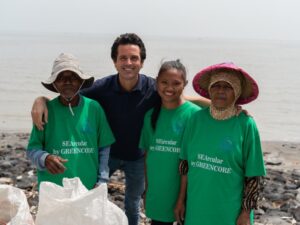
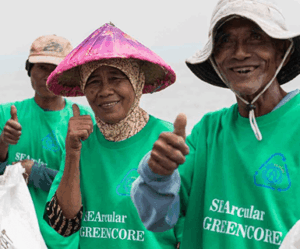
Garri Bernel did not set out to become a community leader. He was a scuba diver. A lawyer. A Filipino living in North Bali, drawn to the quiet rhythm of coastal life in Les Village. A place where mornings begin with the sea, and where livelihoods are tied, intimately and irrevocably, to what lies beneath […]
There is no circular economy without her: The role of women in waste management

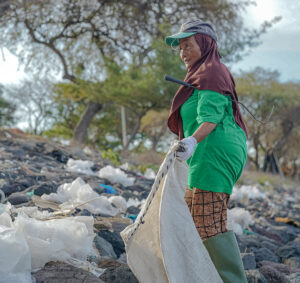
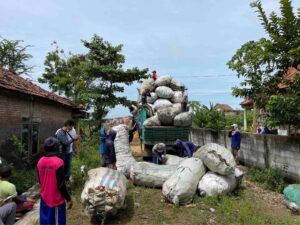
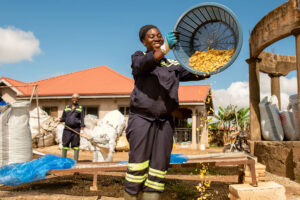
At 6am, before most offices switch on their lights, she is already working. If she has gloves, she wears them. If she can afford a mask, she uses one. In front of her is a pile of plastic that doesn’t belong to her – bottles, sachets, food packaging, film. The leftovers of someone else’s convenience. […]
When art meets ocean waste: Inside the Hunter Gatherer Networks movement

Explore how Indigenous artists are turning ghost gear and marine debris into stories, livelihoods, and resistance, and how the Hunter Gatherer app is building a new kind of cultural marketplace. Over the past 3 years we have been working with some amazing and inspiring indigenous rangers and artists who collect and transform marine debris and […]
Torres Strait Workshops- Transforming Trash to Treasure

The Hunter Gatherer Network team will visit the remote Torres Strait Islands in northern Australia (12-20th May), where these communities are seriously impacted by foreign coastal marine debris and ghost gear pollution. Louise Hardman (Plastic Collective) and Jeremy Sheehan (Bay School of Arts) will run a number of workshops in the Torres Strait Islands on how to transform […]
Plastic Collective registers its first African project under the Verra Plastic Waste Reduction Standard

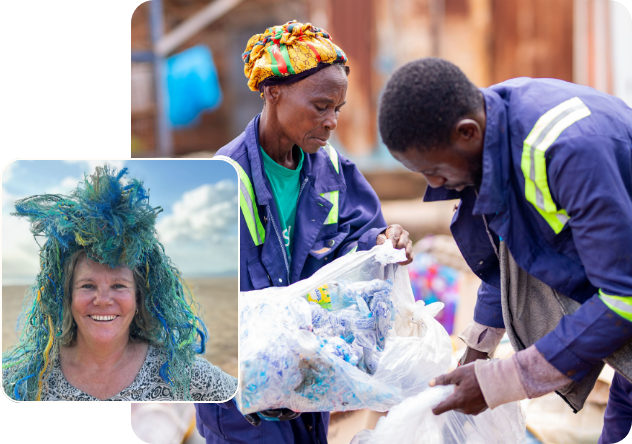
Plastic Collective is proud to announce the registration of the ASASE Foundation’s community-based plastic collection and recycling project under the Verra’s Plastic Waste Reduction Standard. Plastic Collective is the advisory partner to this exemplar project which is leading the charge to address the plastic pollution crisis in Ghana. The ASASE project was also selected for […]
Ghostnet & Marine Debris Artwork Market Place App

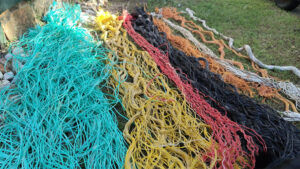
New ghost net & marine debris artwork digital marketplace set up to support indigenous women of Cape York Wei’Num Aboriginal Art and Craft Corporation based in Northwest Cape York, have co-designed an Ocean Arts program called ‘Hunter Gatherers Mamas’ with Plastic Collective (PC) and Charles Sturt University (CSU), to transform marine litter into valuable artworks. […]
Lower Gulf Indigenous Recycling Centre Kicks Off

In August 2022, Plastic Collective delivered the final stage of an Indigenous Recycling Centre in the Gulf of Carpentaria. In response to the largest die-back of mangroves witnessed in the Lower Gulf region in 2016, a project focusing on mangrove health and plastic pollution was developed in a tripartite partnership of Plastic Collective (PC), Earthwatch […]
Wetlands not Wastelands Project

Plastic Collective partners with Earthwatch, Carpentaria Land Council Aboriginal Corporation, and Coca-Cola Australia Foundation to tackle marine pollution in the Gulf of Carpentaria The Gulf of Carpentaria is one of Australia’s most beautiful geographic and diverse locations. The Gulf is situated in Northern Queensland, enclosed on the west by Arnhem Land and on the east […]
Shruder Program in Les Village, Bali

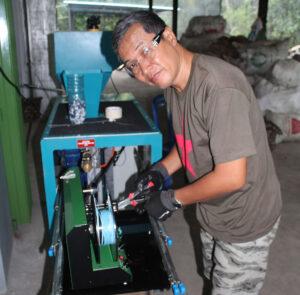
SHRUDER WORKSHOP, LES VILLAGE Over the last few months we have been very busy working with the local community of Les Village in Northern Bali to deliver two training programsand implement their Plastic Resource Recovery program. Sponsored by TJK Maxx and in partnership with Sea Communities, Earthwatch Australia and Professor Steve Smith, their recovery centre has […]
Shruder Program delivered to Mantanani Island, Malaysia

We finally made it to Mantanani Island, 30km northwest of Sabah in Borneo. We are here to deliver our Shruder program for Reef Check Malaysia, sponsored by Coca-Cola. The Mantanani Archipelago consists of 3 islands, the largest called Mantanani Besar (‘Big Mantanani’). The population consists of approximately 1000 Banjan Ubian locals living in 2 villages. […]