


Raise your hand if you’re a brand that sells consumer packaged goods! 🙋🏽♀️
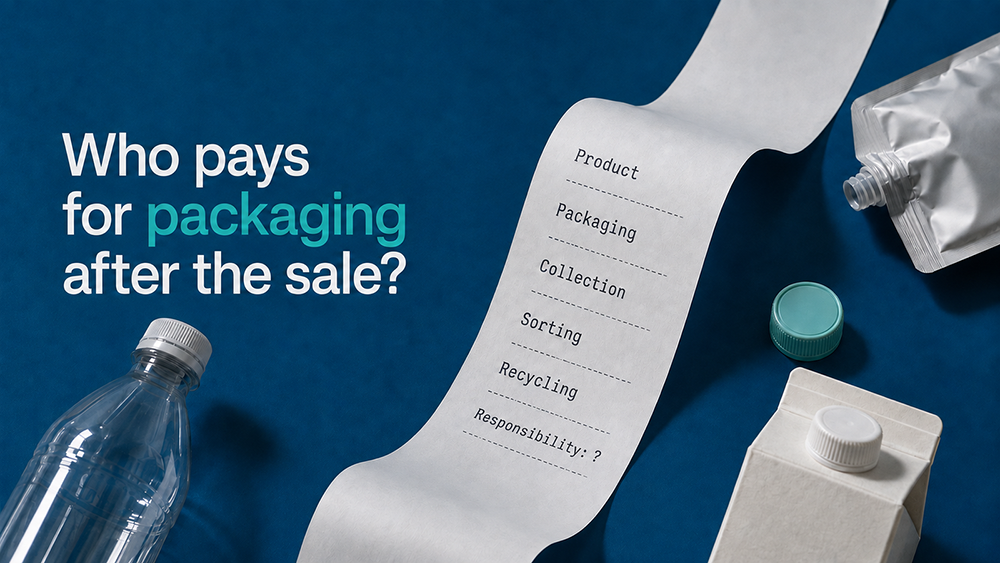
Depending on where your market is, Extended Producer Responsibility (EPR) laws now require you to pay for the waste management of the single-use-packaging that you put out into the world.
In many regions, that means working with a Producer Responsibility Organization (PRO) as part of your EPR compliance strategy.
Today, we’ll walk through how to choose a PRO, what they do, and whether joining one is mandatory in your market.
What is a Producer Responsibility Organization (PRO)?
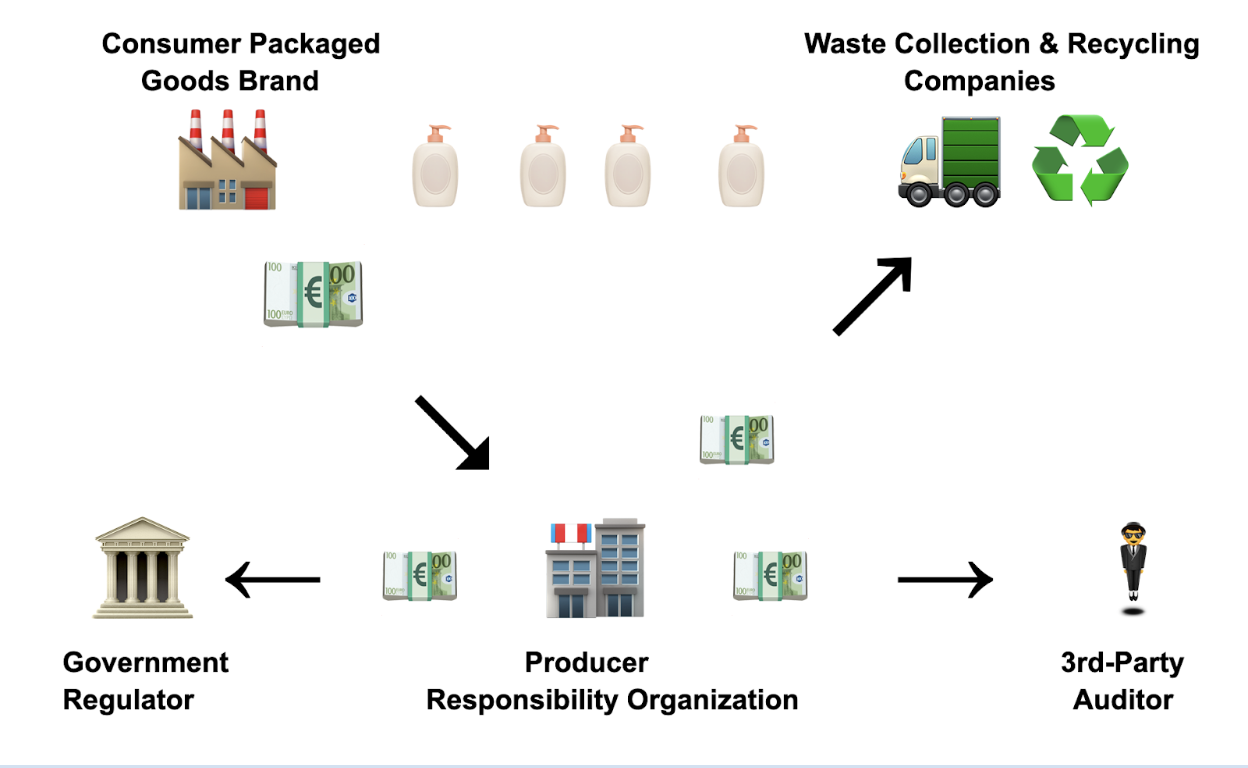
A PRO is a third party non-profit approved by the government regulator, that helps brands stay organized and compliant with the EPR regulations, and handles fee payments to the government, waste management, and auditors.
A PRO typically (Source: Ecosistant):
- Simplifies compliance, with guidance and organizing tools to correctly report your brand’s packaging amounts
- Calculates your EPR fees and pools the money
- Interfaces with the government and waste management on your behalf
- Creates an industry group that can help make sure your brand’s opinions are heard by government regulators
In short, a PRO acts as the operational bridge between producers, regulators, and the waste management system.
Is it mandatory to join a PRO? What if I don’t want to join?
Joining a PRO may be mandatory or optional, depending on the EPR system for your market
In some markets, producers must join an approved PRO. In others, brands can register directly with the government and manage compliance and reporting independently.
Choosing to report your brand’s packaging data directly can save money, since a PRO typically does charge some administrative fees.
Larger companies might prefer to interact directly with the government and recyclers if they can hire their own EPR compliance and reporting manager, rather than working with a PRO.
Understanding the regulatory structure in each jurisdiction is critical to avoiding penalties and unnecessary costs.
How PRO requirements differ by region
EPR regulations vary significantly across countries. Below is a simplified comparison of how Producer Responsibility Organizations operate in major markets.
United Kingdom
PRO mandatory or optional?
PRO Names
Cost
Registration
Optional
(Source: Gov.UK)
PROs are called “Compliance Schemes”
PROs are called “Compliance Schemes”
PRO mandatory or optional?
Optional
(Source: Gov.UK)
PRO Names
PROs are called “Compliance Schemes”
Cost
PROs are called “Compliance Schemes”
Registration
India
PRO mandatory or optional?
PRO Names
Cost
Registration
PRO is not required.
The guidelines do not specify the role of PROs
Unregulated PROs exist and mostly help brands with data reporting into the government portal.
(Source: CSE India, Chapter 4 (2024))
There are no officially registered PROs in this EPR scheme. PROs that exist are unregulated.
No PRO fees
PRO mandatory or optional?
PRO is not required.
The guidelines do not specify the role of PROs
Unregulated PROs exist and mostly help brands with data reporting into the government portal.
(Source: CSE India, Chapter 4 (2024))
PRO Names
There are no officially registered PROs in this EPR scheme. PROs that exist are unregulated.
Cost
No PRO fees
Registration
Philippines
PRO mandatory or optional?
PRO Names
Cost
Registration
Optional
(Source: Gov.ph EPR FAQ)
Officially registered PROs are viewable in the government EPR hub
Contact a registered PRO for fee details
Brands may register directly in the government EPR hub, or through a registered PRO (Source: Gov.ph EPR FAQ)
PRO mandatory or optional?
Optional
(Source: Gov.ph EPR FAQ)
PRO Names
Officially registered PROs are viewable in the government EPR hub
Cost
Contact a registered PRO for fee details
Registration
Brands may register directly in the government EPR hub, or through a registered PRO (Source: Gov.ph EPR FAQ)
Vietnam
PRO mandatory or optional?
PRO Names
Cost
Registration
Optional. Brands may choose to use a PRO, organise recycling activity themselves, or pay a fee into a government fund.
There are two officially registered PROs to date.
(Source: Dept of Agriculture)
Contact a registered PRO for fee details
Brands must register directly and report annually on the government EPR hub.
PRO mandatory or optional?
Optional. Brands may choose to use a PRO, organise recycling activity themselves, or pay a fee into a government fund.
PRO Names
There are two officially registered PROs to date.
(Source: Dept of Agriculture)
Cost
Contact a registered PRO for fee details
Registration
Brands must register directly and report annually on the government EPR hub.
European Union
PRO mandatory or optional?
PRO Names
Cost
Registration
PROs are optional, and they register with each Member State
(Source: EPR Regulation)
By August 2026, each Member State will establish its own EPR register.
See PROs there. For example, here is Germany’s register.
Contact a registered PRO for fee details.
Brands must register with each Member State they sell in.
PRO mandatory or optional?
PROs are optional, and they register with each Member State
(Source: EPR Regulation)
PRO Names
By August 2026, each Member State will establish its own EPR register.
See PROs there. For example, here is Germany’s register.
Cost
Contact a registered PRO for fee details.
Registration
Brands must register with each Member State they sell in.
California, USA
PRO mandatory or optional?
PRO Names
Cost
Registration
Mandatory with some exceptions.
Most join the PRO unless they qualify for an exemption or are submitting an individual plan.
(Source: CA.gov)
The only PRO is the Circular Action Alliance.
Free to register with the PRO, then fees are calculated based on packaging amounts.
Brands must register with the PRO directly.
PRO mandatory or optional?
Mandatory with some exceptions.
Most join the PRO unless they qualify for an exemption or are submitting an individual plan.
(Source: CA.gov)
PRO Names
The only PRO is the Circular Action Alliance.
Cost
Free to register with the PRO, then fees are calculated based on packaging amounts.
Registration
Brands must register with the PRO directly.
How to evaluate a producer responsibility organization
When choosing a PRO, consider:
- Is it officially registered or government-approved?
- What administrative fees are charged?
- How transparent is fee calculation?
- What reporting tools and compliance support does it provide?
- What internal and external audit processes are in place?
- Does it operate in all markets and cover all plastic material types that you sell?
- Is it partnering with reputable plastic waste processors that are able to meet your immediate and future needs?
Your decision should balance cost, compliance risk, and operational complexity.
Need support with EPR compliance?
EPR regulations are evolving quickly across regions. Whether you’re evaluating a Producer Responsibility Organization (PRO) or managing compliance directly, the structure you choose can significantly impact cost and risk.
If you need support navigating EPR requirements or assessing the right compliance pathway for your business, our team can help.
Need support with EPR compliance?
EPR regulations are evolving quickly across regions. Whether you’re evaluating a Producer Responsibility Organization (PRO) or managing compliance directly, the structure you choose can significantly impact cost and risk.
If you need support navigating EPR requirements or assessing the right compliance pathway for your business, our team can help.
FAQs
What is a producer responsibility organization (PRO)?
A Producer Responsibility Organization (PRO) is a government-approved third party that manages EPR compliance, fee payments, and packaging reporting on behalf of producers.
Do I have to join a PRO for EPR compliance?
It depends on the country. Some jurisdictions require brands to join a PRO, while others allow direct government registration.
Can I manage EPR compliance without a PRO?
Yes, in some markets. However, this requires internal expertise, accurate reporting systems, and ongoing regulatory monitoring.
How do I choose the right PRO?
Review whether it is officially registered, compare fee structures, evaluate reporting tools, and confirm geographic coverage across your markets.
Related Posts

Responsible End Markets (REM): How US EPR laws are reshaping demand for recycled plastic
Across the United States, packaging Extended Producer Responsibility (EPR) laws are evolving rapidly and, with them, a major shift in

UK EPR deadlines 2026: Key dates, reporting rules and compliance risks
If you’re a brand in the UK and you use packaging, the new UK extended producer responsibility (UK EPR) regulations
California SB54 EPR Fees Explained: How Material Choices Affect Producer Costs in 2026–2027
California Senate Bill 54 (SB54), the state’s Extended Producer Responsibility (EPR), law is one of the largest and most complex
Design for Recyclability 2026: New material, label & additive restrictions
The 2025 EU PPWR (Packaging Waste Regulation) has ushered in a ‘packaging renaissance’, where packaging is being designed for both

How to build an EPR-ready packaging data architecture for 2026
Extended Producer Responsibility (EPR) laws are expanding rapidly across global markets. For brands, this shift brings a clear reality: packaging

COP30 brand takeaways from Belém: what matters for packaging EPR and plastic recovery
Belém, the host city of COP30, has become a vivid symbol of climate disruption. From extreme heat to deforestation and
California’s SB 54 plastic packaging EPR: November 15 deadline explained and what’s next
California’s SB 54 plastic packaging EPR law is the most ambitious packaging policy in the United States. It requires producers

Extended Producer Responsibility – How Can It Drive Global Circularity and Sustainability?
Extended Producer Responsibility (EPR) is the concept that producers and importers should take responsibility for the products they put into

What is Extended Producer Responsibility (EPR) & How do Plastic Credits Fit In?
What is EPR? Extended Producer Responsibility (EPR) is the concept that brands, plastic packaging producers and importers should take responsibility