

Ask ten companies about their plastic strategy and you’ll probably hear ten different answers.
One business is redesigning its packaging. Another is preparing for new Extended Producer Responsibility (EPR) requirements. A third is investing in recycled content, while another is exploring plastic recovery initiatives. Each organization is making progress, but they’re not necessarily working on the same stage of the journey.
For years, conversations about plastic have focused on individual initiatives. Reduce plastic. Improve recyclability. Increase recycled content. Meet compliance requirements. All of these are important, but none of them, on their own, constitute a complete plastic strategy.
The organizations making the greatest progress don’t rely on a single initiative. Instead, they build capabilities over time, creating a strategy that evolves alongside changing regulations, customer expectations, and business priorities.
At Plastic Collective, we think of this as The Plastic Strategy Framework: five connected stages that help organizations move from simply meeting expectations to creating long-term business value.
So where does your business sit?
Stage 1: Meet expectations
Every organization begins in the same place: compliance. Whether it’s Extended Producer Responsibility (EPR), packaging reporting requirements, or emerging sustainability regulations, businesses first need to understand what is expected of them and how those expectations continue to evolve.
At this stage, success is measured by reducing risk. Companies focus on meeting legal obligations, submitting accurate reports, preparing for audits, and ensuring they can respond confidently as regulatory requirements become more complex.
Compliance is essential because it protects the business. However, it rarely differentiates a brand. Customers expect companies to comply with the law. Meeting those expectations keeps you in the market, but it doesn’t create a competitive advantage.
Once those foundations are in place, most organizations begin asking a different question: How can we reduce our impact?
Stage 2: Improve products
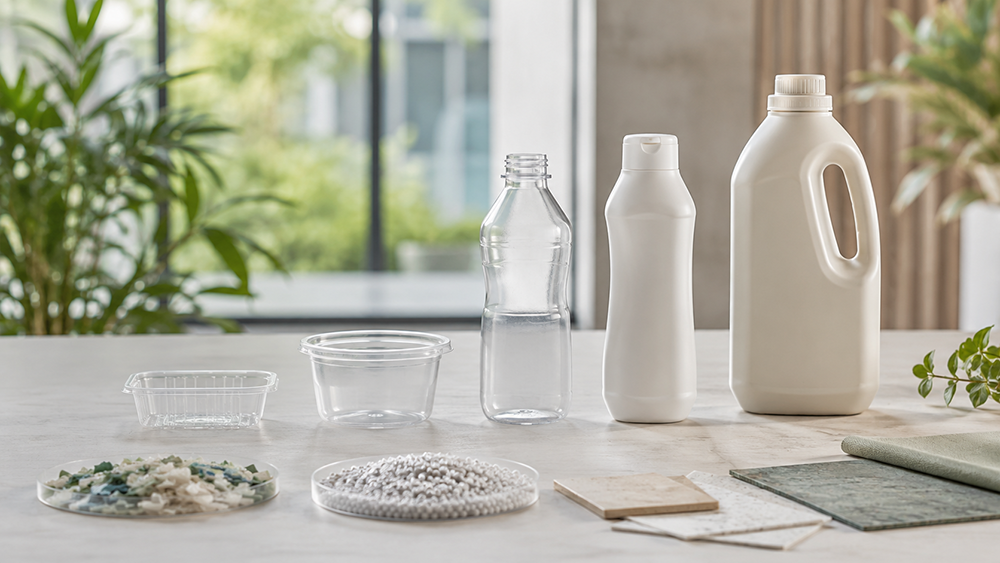
This is where many businesses invest the majority of their sustainability efforts. They redesign packaging, remove unnecessary plastic, reduce packaging weight, increase recycled content, improve recyclability, and explore reusable alternatives wherever they’re practical.
These initiatives matter because they can reduce environmental impact while often improving operational efficiency. Using fewer materials can lower costs, lighter packaging can reduce transportation emissions, and smarter designs can make products easier to recover at the end of their life.
However, better packaging doesn’t automatically guarantee better outcomes.
A package may be designed for recyclability, but if it isn’t collected, sorted, or processed by real-world recycling systems, its environmental potential is never fully realized. Design is only one part of the equation. The strongest organizations recognize that sustainable packaging extends beyond what happens in the design studio. It also depends on the systems that manage packaging after consumers are finished with it.
That realization naturally leads to the next stage.
Stage 3: Understand your impact
Many organizations announce ambitious sustainability commitments before they fully understand their starting point. The most effective organizations reverse that process. They begin by measuring.
Understanding how much plastic enters the market each year, which materials are being used, where the greatest opportunities for improvement exist, and how recovery rates change over time gives businesses something far more valuable than a target. It gives them a baseline for decision-making.
Measurement transforms sustainability from aspiration into management. Instead of saying, “We’re working to reduce plastic,” organizations can demonstrate what they’ve achieved, where challenges remain, and how they’re improving over time.
Reliable data also strengthens internal decision-making. It helps prioritize investments, identify inefficiencies, prepare for reporting requirements, and communicate progress with greater confidence. Quite simply, organizations can’t effectively manage what they don’t understand.
Stage 4: Build trust
As sustainability becomes more important to consumers, investors, retailers, and regulators, expectations around transparency continue to rise. Environmental claims are no longer accepted at face value. Increasingly, stakeholders want evidence.
That means organizations need to demonstrate not only what they’re doing, but also how they know it’s making a difference. Third-party verification, transparent reporting, traceable recovery programs, QR codes linked to impact information, and credible sustainability communications all help strengthen trust.
The strongest brands don’t ask customers to simply believe their claims. They provide enough evidence for people to evaluate those claims themselves. In an environment where greenwashing concerns continue to grow, transparency has become one of the most valuable assets a business can build.
Stage 5: Lead the market
At the final stage, plastic strategy becomes much more than a sustainability initiative. It becomes part of the overall business strategy.
Leading organizations no longer ask, “How do we meet expectations?” Instead, they ask, “How can sustainability help us create value?”
By this point, plastic strategy influences product development, procurement, operations, marketing, investor conversations, and long-term planning. Sustainability is no longer managed by a single department. It’s integrated into the way the organization makes decisions.
Rather than viewing plastic management as a cost, these organizations recognize its ability to strengthen customer relationships, support retailer requirements, reduce long-term business risk, attract investment, and differentiate products in increasingly competitive markets.
Environmental performance and commercial performance are no longer separate conversations. They’re part of the same strategy.
The biggest misconception
One of the most common misconceptions is that these stages replace one another. They don’t.
Organizations don’t stop focusing on compliance once they’ve redesigned their packaging. They don’t stop measuring once they begin communicating their impact. And they certainly don’t stop improving products once sustainability becomes part of their competitive advantage.
Instead, each stage builds on the last.
A mature plastic strategy combines compliance to meet evolving expectations, better packaging to reduce environmental impact, measurement to guide decisions, transparency to build trust, and business integration that creates long-term value. It’s the combination of these capabilities – not any single initiative – that transforms sustainability from a collection of projects into a connected business strategy.
Where does your business sit?
The simplest way to assess your organization’s maturity is to ask five questions.
Stages:
Meet expectations
Ask yourself…
Are we meeting current regulatory requirements while preparing for future ones?
Improve products
Ask yourself…
Are we actively reducing unnecessary plastic and improving packaging design?
Understand your impact
Ask yourself…
Do we measure our plastic footprint and use that data to guide decisions?
Build trust
Ask yourself…
Can we support our sustainability claims with credible evidence and transparent reporting?
Lead the market
Ask yourself…
Is our plastic strategy creating value for customers, partners, and the business itself?
If you answered “yes” to only one or two, you’ve established the foundation. If you reach three or four, you’re building a mature strategy. If you can confidently answer all five, you’re likely treating plastic not simply as an environmental issue, but as an opportunity to strengthen your business while creating measurable impact.
The future of plastic strategy
The organizations leading the next decade won’t be defined by a single sustainability initiative. They won’t stand out simply because they’ve reduced plastic, improved recyclability, or met compliance requirements. Those are increasingly becoming the baseline.
The businesses that lead will be the ones that connect compliance, product innovation, measurement, transparency, and commercial strategy into a single, integrated approach. They’ll recognize that plastic strategy isn’t a series of isolated projects. It’s an organizational capability that strengthens resilience, builds stakeholder trust, and creates long-term value.
That’s ultimately what the Plastic Strategy Framework is designed to encourage. Not a checklist of activities, but a roadmap for building a strategy that’s practical, measurable, and capable of evolving alongside the expectations of tomorrow.
Build a more mature plastic strategy
Whether your organization is preparing for new packaging regulations, redesigning products, measuring plastic use, or strengthening sustainability claims, Plastic Collective helps businesses build practical, evidence-based strategies that create measurable impact.
Let’s connect and discover where your organization sits on the Plastic Strategy Framework.
FAQs
What is a plastic strategy?
A plastic strategy is a structured approach to managing the environmental impact of plastic throughout a business. It goes beyond reducing plastic use to include regulatory compliance, packaging design, measurement, transparency, and long-term business planning. A strong plastic strategy helps organizations reduce risk, meet stakeholder expectations, and create measurable environmental outcomes.
How can businesses reduce their plastic footprint?
Businesses can reduce their plastic footprint by eliminating unnecessary plastic, redesigning packaging, increasing recycled content, improving recyclability, and measuring the amount of plastic they place on the market. Many organizations also support verified plastic recovery programs as part of a broader strategy to take responsibility for the plastic they continue to use while transitioning to more sustainable packaging.
Why is measuring plastic use important?
Measuring plastic use provides the baseline needed to make informed decisions and demonstrate progress over time. Without reliable data, it’s difficult to identify opportunities for improvement, prepare for reporting requirements, substantiate sustainability claims, or communicate environmental performance with confidence.