


Design for recyclability (DfR) has become one of the most widely discussed concepts in sustainable packaging.
Brands are redesigning packaging formats, reducing problematic materials, improving recyclability scores, and aligning products with emerging regulatory frameworks.
On paper, this appears to be a significant step forward.
But there is a problem.
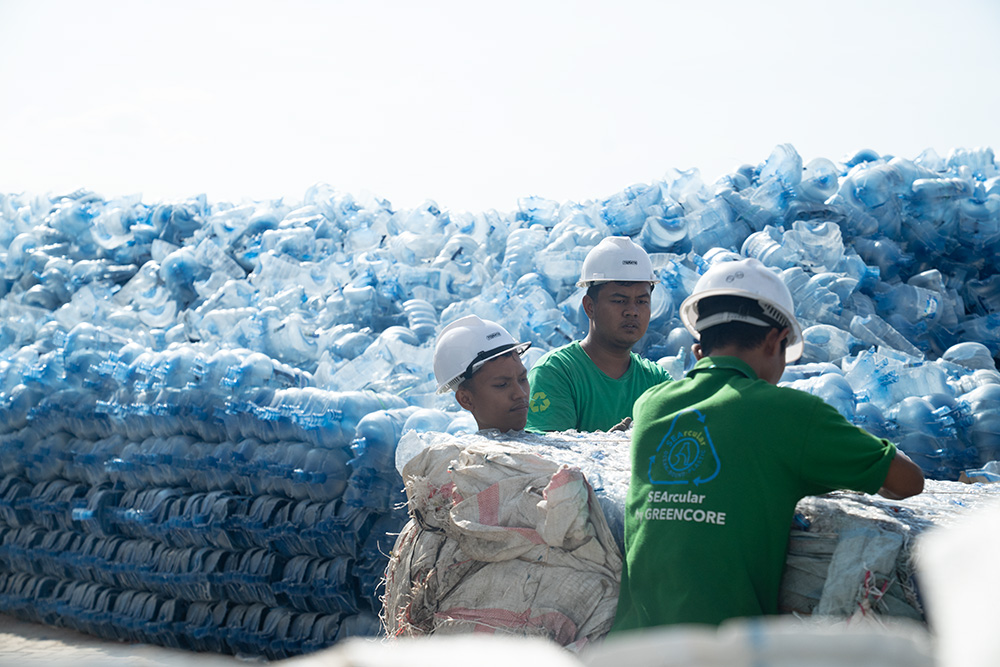
A package can be designed for recyclability and still never get recycled.
As packaging regulations evolve and scrutiny around environmental claims increases, the gap between design intent and real-world outcomes is becoming harder to ignore.
The challenge is not that Design for Recyclability is wrong. The challenge is that many organisations stop at the design stage and fail to consider what happens next.
Want to strengthen the credibility of your packaging claims?
Explore Plastic Collective’s Claims Advisory for Brands to support evidence-based sustainability communications.
What is design for recyclability?
Design for Recyclability (DfR) refers to designing packaging in a way that enables it to be collected, sorted, and recycled within existing recycling systems.
Common DfR strategies include:
- Eliminating problematic materials
- Reducing unnecessary components
- Improving material compatibility
- Using recyclable packaging formats
- Aligning with recognised recyclability guidelines
The objective is simple: make packaging easier to recycle.
As regulatory frameworks such as the EU Packaging and Packaging Waste Regulation (PPWR) increasingly emphasise recyclability performance, DfR is becoming an important part of packaging strategy.
However, recyclability in theory is not always recyclability in practice.
Why this matters
Many companies assume that if packaging meets recyclability design criteria, the sustainability outcome is guaranteed.
In reality, recycling depends on much more than design.
For a package to be successfully recycled, several conditions must exist:
- Consumers must dispose of it correctly
- Collection systems must accept it
- Sorting facilities must identify it
- Recovery infrastructure must process it
- End markets must exist for the recovered material
If any part of that chain breaks down, the package may never be recycled despite being technically recyclable.
This distinction is becoming increasingly important as organisations seek to substantiate sustainability claims and demonstrate packaging accountability.
The question is no longer:
“Was this package designed to be recyclable?”
The question is increasingly:
“Can you demonstrate that recovery is likely, measurable, or verifiable?”

The recyclability gap
One of the biggest misconceptions in packaging sustainability is that design alone determines outcomes. In reality, packaging exists within systems. A package designed for recyclability in one market may face very different outcomes in another.
Collection infrastructure varies.
Sorting capabilities differ.
Recovery economics change over time.
End-market demand fluctuates.
As a result, packaging that performs well in a laboratory assessment or design framework may perform very differently in the real world.
This is often referred to as the recyclability gap: the difference between theoretical recyclability and actual recovery outcomes.
For brands, this gap creates both operational and reputational risks.
What companies often miss
The strongest packaging strategies go beyond design.
They consider the entire recovery pathway.
Leading organisations increasingly ask:
- Is the package compatible with available collection systems?
- Can it be effectively sorted?
- Are recovery pathways established?
- Are sustainability claims supported by evidence?
- Can outcomes be measured and verified?
These questions are becoming increasingly important as Extended Producer Responsibility (EPR) frameworks expand and accountability expectations grow.
Packaging is no longer evaluated solely on its design characteristics.
It is increasingly evaluated on its real-world performance.
Looking beyond recyclability?
Discover how Plastic Collective’s Certified Recovery solutions help organisations support measurable recovery outcomes and strengthen packaging accountability.
The growing compliance and claims risk
As packaging regulations evolve, claims about recyclability are attracting greater scrutiny.
Regulators are increasingly focused on whether environmental claims accurately reflect real-world conditions.
A package that is technically recyclable but unlikely to be recycled in practice may create challenges for organisations making broad sustainability claims.
This does not mean companies should abandon Design for Recyclability.
Far from it.
DfR remains a critical foundation for sustainable packaging.
However, design should be viewed as the starting point rather than the final outcome.
Without traceability, accountability, and credible recovery pathways, even well-designed packaging can struggle to deliver the environmental benefits organisations expect.
Design is only the beginning
Design for Recyclability remains one of the most important tools available to packaging teams.
But sustainable outcomes depend on more than design.
They depend on systems.
The organisations leading the next phase of packaging sustainability recognise that recyclability is not simply a packaging characteristic. It is the result of collection, sorting, recovery, verification, and accountability working together.
As expectations continue to evolve, brands that connect design decisions with measurable recovery outcomes will be better positioned to reduce risk, strengthen claims, and build greater trust with stakeholders.
Build packaging strategies that go beyond design
Plastic Collective helps brands strengthen packaging accountability through certified recovery, evidence-based claims support, EPR readiness, and traceable impact solutions.
Get in touch with our team to create packaging strategies that deliver credible outcomes, not just good intentions.
FAQs
What is Design for Recyclability (DfR)?
Design for Recyclability is the practice of designing packaging so it can be collected, sorted, and recycled within existing recycling systems.
Why does Design for Recyclability sometimes fail?
DfR can fail when packaging is technically recyclable but lacks access to effective collection, sorting, processing, or end-market infrastructure.
Is recyclable packaging always recycled?
No. A package may meet recyclability criteria yet still fail to be recovered due to consumer behaviour, infrastructure limitations, or market conditions.
How does Design for Recyclability relate to EPR?
As EPR frameworks expand, packaging performance is increasingly linked to real-world outcomes. DfR helps improve recyclability, but organisations may also need to demonstrate accountability, reporting, and recovery performance.